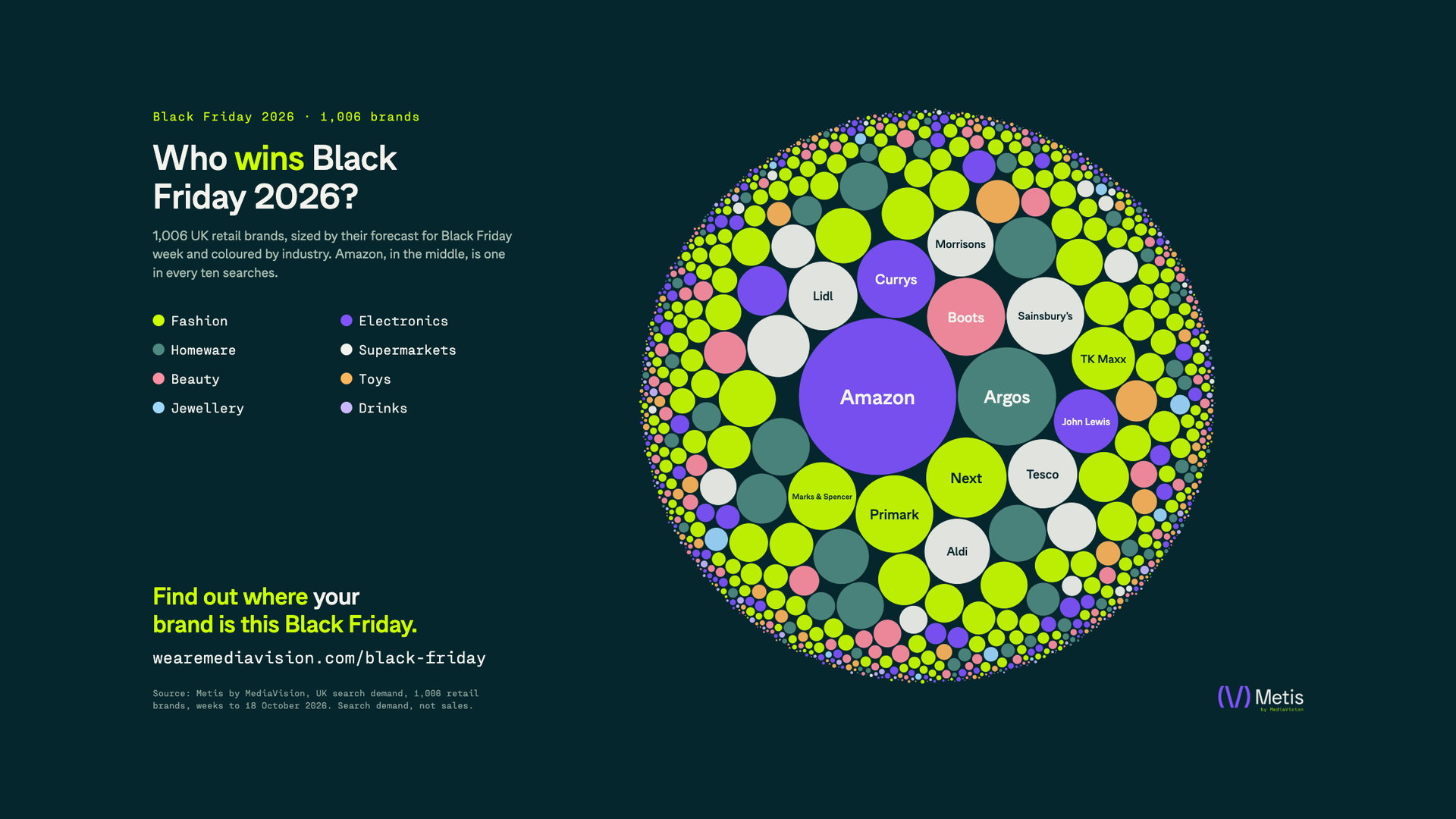
Black Friday 2026 is shaping up to be an interesting one for UK retailers. While Amazon and Argos are expected to remain the biggest names, Boots is gaining ground, toys are outperforming tech, and some of last year's most popular brands are losing momentum.
Using Metis, we've analysed four years of consumer search behaviour to forecast which retailers, brands and industries are likely to attract the most attention this Black Friday. The findings reveal some interesting shifts in shopping habits and where brands are gaining or losing ground in consumer search demand.
Here's what stood out for us.
Boots is catching up with the Black Friday giants
Unsurprisingly, Amazon is forecast to remain the UK's most searched Black Friday retailer, attracting 7.19 million searches during Black Friday week. Despite topping the leaders, that's actually a 1% decline compared with 2025. Other Black Friday favourites such as Argos and Currys are also both expected to see searches fall by 2%.
Boots, on the other hand, is heading in the opposite direction. Search demand is predicted to increase by 17% to 1.78 million, putting it level with Currys.
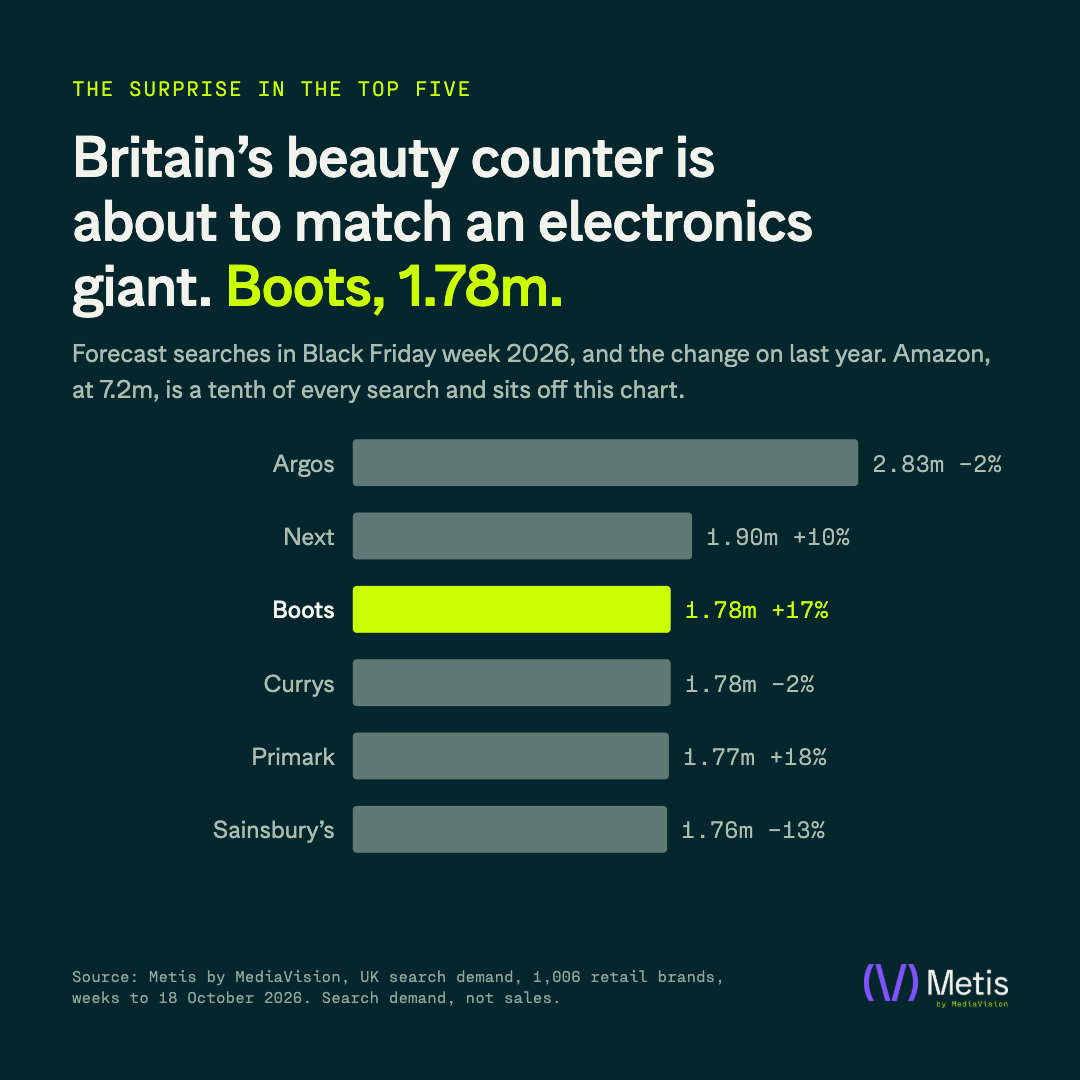
Despite not traditionally taking part in Black Friday, fashion giant Next is also predicted to perform strongly, with searches to grow 10% to 1.90 million.
It's a sign that traditional electronics retailers are losing some of their dominance over Black Friday. Brands with strong year-round consumer interest are increasingly competing for attention during peak trading.
For retailers, the shift also highlights the importance of looking beyond total search volume. Amazon might remain comfortably ahead, but faster growth from competitors such as Boots and Next tells a different story about how consumer interest is changing.
Toys are growing three times faster than technology
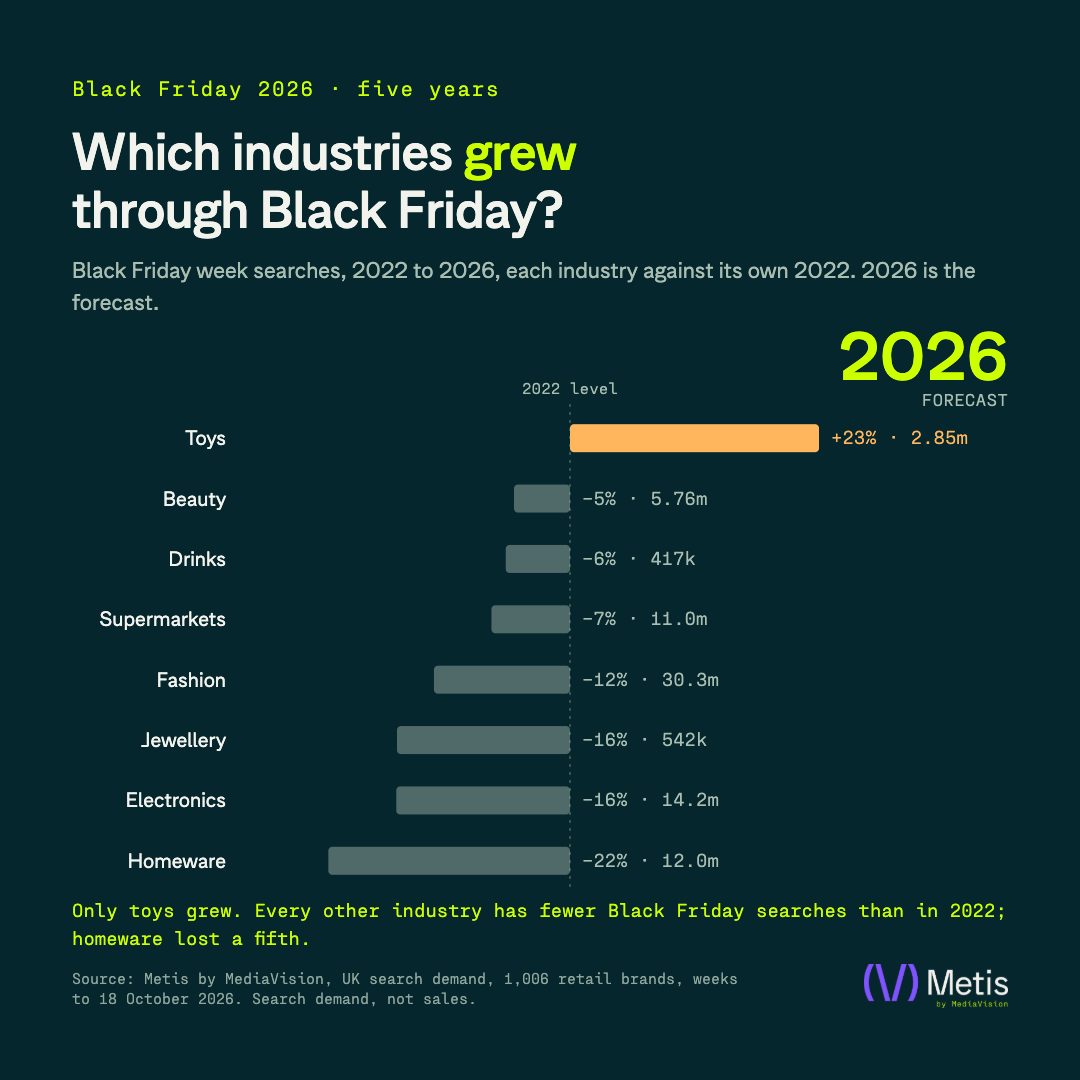
With Christmas just weeks after Black Friday, shoppers appear to be turning their attention towards gifting. With household budgets currently stretched by the cost of living, it's no surprise that shoppers are turning to deals to make their money go further in the festive season.
This year, toys are forecast to be the fastest-growing retail category, with searches increasing by 6.9% year on year. That's more than three times the growth expected for consumer electronics (+2.2%).
And it's familiar favourites attracting attention. Jellycat is expected to lead toy searches (559,000, +4%), while LEGO is forecast to grow 13% to 508,000 searches and The Entertainer by 16% to 190,000.
But what about last year's must-haves? Labubu, which seemed to be everywhere in 2025, is forecast to see searches fall by a huge 67%.
It's a useful reminder of how quickly consumer interest can shift. Products that dominated searches last year aren't guaranteed to attract the same attention this Black Friday, particularly when their popularity has been driven by short-lived trends.
For retailers, understanding where search demand is accelerating can help identify emerging opportunities ahead of peak trading, rather than relying solely on last year's bestsellers.
Beauty is set for the biggest Black Friday search spike
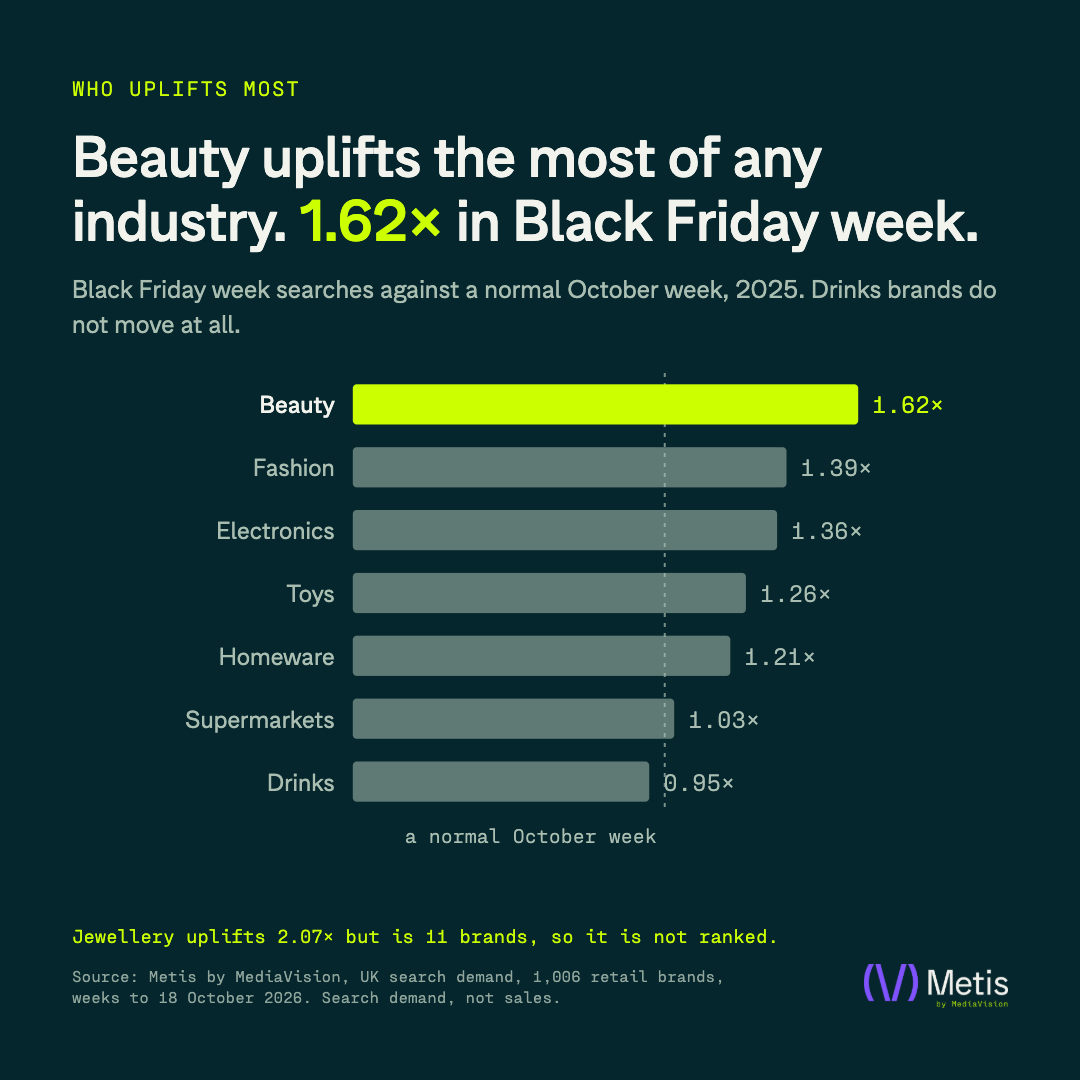
Beauty is expected to see the largest seasonal uplift of any industry, with searches reaching 1.6 times their typical weekly volume. However, this increased interest isn't translating into growth for every brand.
Boots leads the category, with forecast search growth of 17%, followed by positive predictions for Rituals (+18%), Sephora (+8%) and Superdrug (+7%).
Elsewhere, Charlotte Tilbury (−14%), Cult Beauty (−9%) and Lookfantastic (−3%) are expected to see declines. Sol de Janeiro is also forecast to experience a 45% drop in searches following last year's surge in popularity.
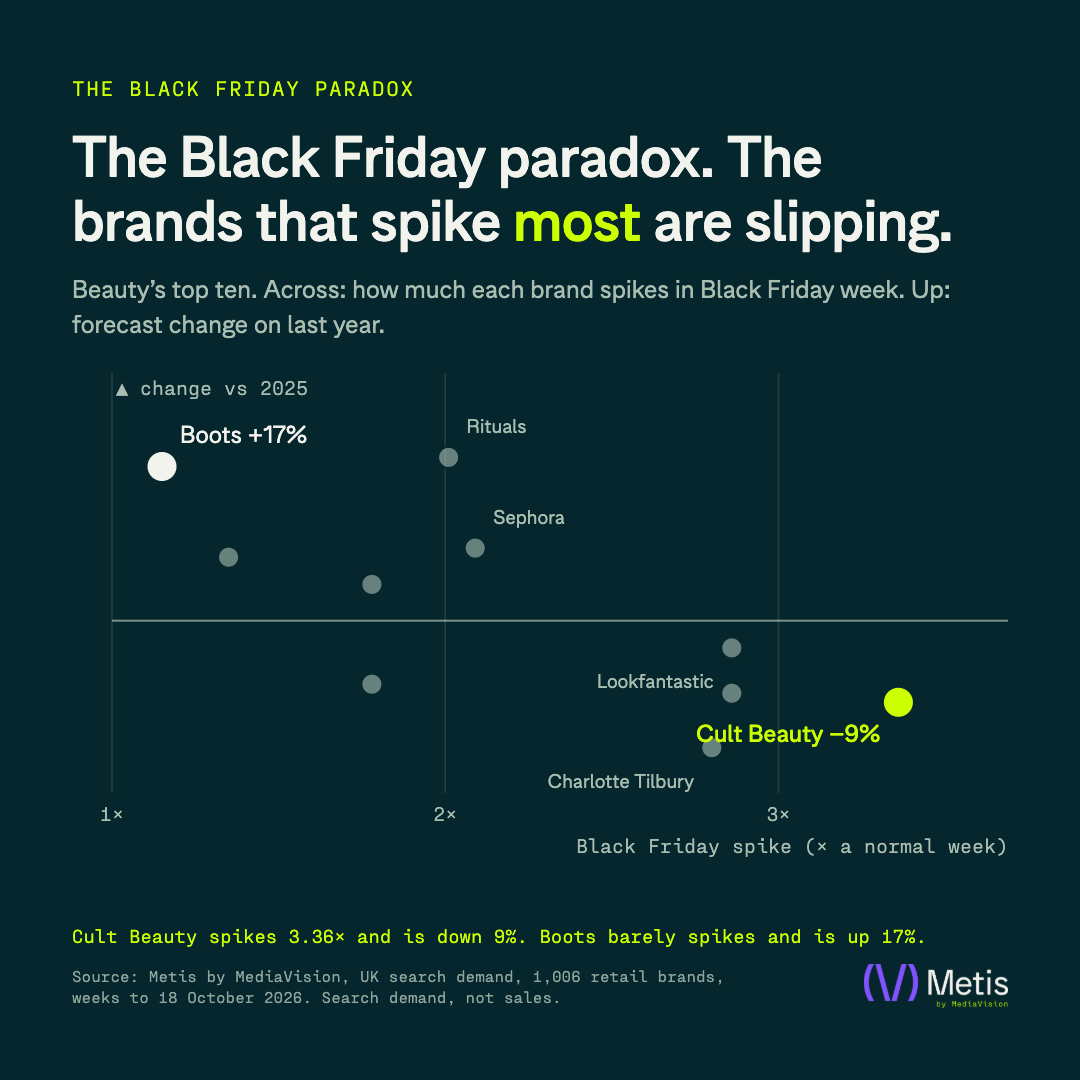
Cult Beauty is a particularly interesting example. Searches for the retailer typically more than triple during Black Friday compared with an average week, yet demand is still expected to be 9% lower than in 2025.
It highlights an important distinction between seasonal uplift and year-on-year growth. A brand can experience a significant increase in searches during Black Friday while still attracting less consumer interest than the previous year.
For beauty retailers, where demand is often driven by social media, product launches and changing trends, maintaining consumer interest outside promotional periods is just as important as capturing it during the sales.
What Black Friday 2026 tells us about search visibility
One of the clearest findings from this year's forecasts is that the retailers attracting the most searches aren't necessarily the ones seeing the strongest growth.
Amazon remains comfortably ahead in total search volume, but Boots and Next are gaining momentum. Meanwhile, established toy brands are attracting growing interest as some of last year's viral favourites lose their appeal.
These changes matter because search demand offers a view of which brands consumers are actively thinking about, rather than simply which websites are appearing in search results.
A retailer can maintain strong organic rankings but still experience declining traffic if fewer people are searching for its products or brand. Equally, growing demand creates more opportunities to capture visibility, provided brands are well positioned to meet it.
That's why looking at organic performance alongside wider market demand is so important. Rankings and traffic alone don't always tell the full story, particularly during a competitive seasonal period like Black Friday.
The brands best positioned to capitalise are those paying attention to how consumer interest is changing throughout the year, rather than waiting until November to react.
Explore the full Black Friday 2026 findings
From Boots challenging Currys to toys outpacing technology, this year's forecasts show how quickly consumer attention can move between brands, products and industries.
Our full Black Friday 2026 report explores the retailers and products forecast to attract the most searches, alongside the trends gaining and losing momentum.
See how your brand is predicted to perform.
Our research analysed four years of consumer search behaviour, with a forecast for 2026, using MediaVision's proprietary search intelligence platform, Metis. Forecasts compare predicted search demand during Black Friday week in 2026 against 2025.