The Importance of UGC in Retail Search & GEO


Looking back five years, or even just one year, the search landscape has changed dramatically. Competition in search has become increasingly fierce, with brands not only competing for visibility on traditional search engines like Google, but also on the newest way to search, LLM’s.
As search continues to evolve, strategies must follow suit, adapting to where discovery is heading.
How has search behaviour changed?
What was a linear search journey has now turned into a “search everywhere” approach. Consumers are no longer going straight to a search engine to make buying decisions, instead, they are diversifying their searches. AI platforms and social media have become integral parts of a consumer’s search journey, allowing consumers to browse the best options available and validate purchase decisions through real life experiences.
We are also seeing different platforms serve as decision makers depending on intent. For example:
- TikTok: typically used for product discovery and trend inspiration
- Reddit: for honest reviews and recommendations
- YouTube: for more in-depth comparisons and product education
Search fatigue is another influence that we have seen impact search behaviour. Consumers are overwhelmed by endless options, wanting much more direct answers, moving from “help me with this research” to “do this research for me”. Instead of spending time scrolling through pages of results, people are increasingly looking for trusted summaries, recommendations from creators they follow, and social proof from real people and communities online.
This means brands need to be visible and credible on search and social platforms, which is where user-generated content comes into play.
What is UGC?
User-generated content (UGC) is not just a buzzword; it’s an integral part of many successful marketing strategies. As consumers continue to seek authenticity and relatability, UGC presents a unique opportunity for brands to connect with their audience in a genuine and impactful way, putting real-life experiences at the centre of the conversation.
As media consumption and search behaviour continue to evolve, PR strategies can no longer be led solely by brand messaging. An avenue of success is becoming familiar with culturally relevant topics within your niche, actively engaging your brand within these conversations and collaborating with external voices to build both visibility and credibility.
- Trust & Authenticity: Consumers trust content created by other consumers, which can result in more engagement and conversions. In a saturated digital landscape, authenticity shines through and can help brands build credibility in a way traditional advertising can’t.
- Organic Content Creation: Utilising user-generated content can reduce the need for large-scale in-house content creation.
- Community Engagement: UGC helps build a sense of community and encourages other consumers to do the same and share their experience, which can also lead to further engagement and reach new audiences.
- Supports SEO: UGC can boost SEO efforts and improve online visibility with organic keywords and more content linked to the brand.
- Social Proof: UGC is a form of social proof that shows real reviews and experiences from real customers.
Third party signals help AI determine brand credibility
Third-party content, like UGC, is becoming increasingly important for AI visibility because AI platforms pull information from a wide range of trusted sources, including high authority news sites, creator content, and reviews. This means brands are no longer being evaluated solely on what they say about themselves, but on how consistently they are being talked about and recommended across the internet.
Google’s evolving priorities
Google favours people-first content of a product or service quality, and this is exactly what user-generated content feeds into as a part of Google’s E-E-A-T framework (Experience, Expertise, Authoritativeness, Trustworthiness). When used correctly, it can help brands differentiate themselves from the competition and expand their visibility on a bigger scale.
If brands continue to overlook the power of UGC, not only is it a risk for a brands visibility in conversation search but will allow the brands that are already implementing it dominate AI recommendations which influence purchase decisions the most.
Best practice of using UGC effectively
Brands should not restrict their UGC strategies to their own website. Platforms such as TikTok, Reddit can have a big impact in terms of visibility across search and AI snippets.
Sportswear giant Adidas, for example, has utilised Reddit to connect directly with communities, answer customer questions, and have conversations about their products. This strategy can help generate valuable user-generated content while also strengthening brand trust and visibility across search.
Another way brands are implementing this strategy is by tapping into conversations their audiences are already having online through creators. Rather than leading the conversation themselves, brands are facilitating and fleshing out discussions that are relevant to their audience.
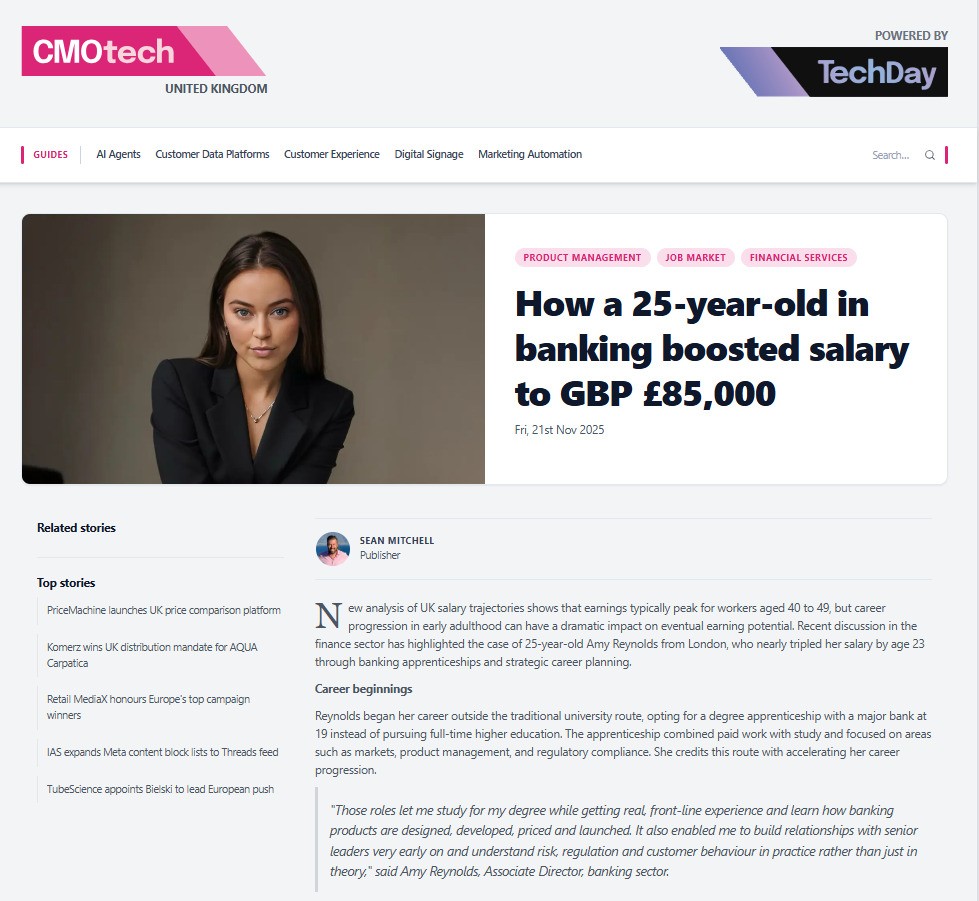
For example, for one of our clients who specialises in office solutions, we identified job and career development as a topic where the brand can speak and build authority within. After seeing the conversation trending online, we sourced a creator already speaking credibly on the topic and used that content to facilitate wider media conversations through PR coverage. This resulted in high-authority coverage across national and regional titles, including The Sun, as well as highly targeted industry publications such as CMOtech, allowing the brand to reach both mass and niche audiences naturally.
The future of UGC and Search
Search queries are getting longer and more specific. Brands are competing not just for short-tail keywords like ‘best trainers’ or ‘best sportswear’, but also for more conversational, long-tail keywords like ‘what trainers have the best arch support’, which people tend to search for in LLMs and social media platforms. And this is exactly where user-generated content can help an effective search and GEO strategy.
At MediaVision, our competitive edge lies in our ability to identify emerging trends up to four times faster than competitors, using our platform Metis. This allows us to react quickly, helping brands tap into relevant discussions while momentum is building and translate those insights into storytelling moments increasing visibility across the search universe. If you want to learn more, check out our Digital PR services.


